
Coordination Committee Candidates 2026
Candidates
Ivette Arroyo – Igor Costarelli – Darinka Czischke – Emma Holmqvist –
Ebru Ergoz Karahan – Johanna Lilius – Iván Tosics – Constance Uyttebrouck
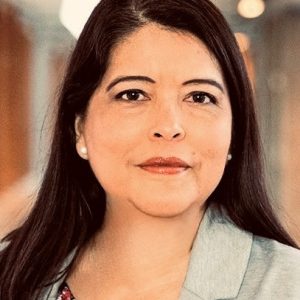
Ivette Arroyo is an architect and researcher with more than 25 years of combined professional and academic experience in Ecuador and Sweden. She earned her PhD from Lund University in 2019 with a dissertation on user involvement in post-disaster housing recovery in the Philippines. Her early research examined housing and human settlements in contexts of vulnerability and transition, focusing on organised self-help housing, post-disaster reconstruction, and the capability-enhancing potential of user participation in housing processes.
Her work explores how design practices, co-creation, everyday governance, and community-led initiatives can foster well-being, social integration, and resilience. This includes long-standing research interests in intergenerational collaborative housing, housing for the second half of life, and shared living models for students and diverse social groups as pathways toward more inclusive and sustainable built environments.
Ivette’s recent research investigates collaborative housing during the COVID-19 pandemic, leading the European project COHOPE, which explored links between affordability, social integration, and health across five countries. She currently leads the DUT-funded project AGE 15 on age-friendly 15-minute neighbourhoods and collaborative housing for ageing in place. In Sweden, she serves as Principal Investigator for projects such as HouseWell and CoLed, examining supportive housing for older adults and the relationships between design, sharing practices, and sustainability behaviours.
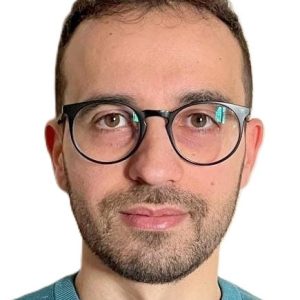
Igor Costarelli I am an Assistant Professor in Urban Sociology at the University of Genoa, Italy. I hold a PhD in Urban Studies jointly awarded by the University of Milano-Bicocca and TU Delft. Before joining my current institution, I held several post-doc positions at the University of Milano-Bicocca. Over the years, I have been actively engaged in urban research, focusing on residential segregation, social mix, social housing management, and housing for younger generations.
I have been involved in ENHR for over ten years, first as a regular presenter and later as coordinator of the Working Group “Housing and Young People”. Since 2022, I have been a member of the Coordination Committee, where I have served as contact person for new housing researchers, a role that has given me the opportunity to support early-career researchers in engaging with ENHR, mainly by organising annual online seminars.
By standing for election, I hope to continue serving on the Coordination Committee and to contribute to the further development of network’s activities with the same commitment and dedication.
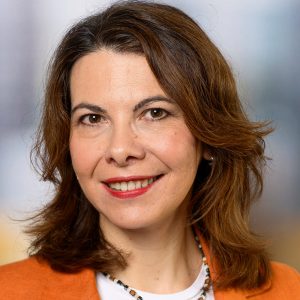
Darinka Czischke I am a housing sociologist with over 25 years of international experience as a researcher, educator, and policy advisor. My career has taken me across countries and institutions, from serving as Research Director of the European Social Housing Observatory at Housing Europe (2005–2010) and Director of World Habitat (2014), to earlier roles at the LSE Cities Programme (2002–2004) and the Centre for Environmental Research and Planning in Chile (1999–2001). I moved to the Netherlands in 2015, where I work as Associate Professor of Housing and Social Sustainability at TU Delft’s Faculty of Architecture and the Built Environment.
The ENHR has been my home as a housing researcher since 2005. I have coordinated several working groups, including “Social Housing: Institutions, Organisations and Governance” and “Policy and Research,” and I launched the “Collaborative Housing” group in 2016. I have served on the Coordination Committee since 2018 and became a vice-chair in 2024. These experiences have given me a deep appreciation for the richness and diversity of our community. As a CC member, I am committed to strengthening ENHR’s visibility, nurturing meaningful connections among members, and ensuring our conferences remain both rigorous and welcoming spaces.
I live in The Hague with my husband, my 16‑year‑old daughter, and our cat, Theo.
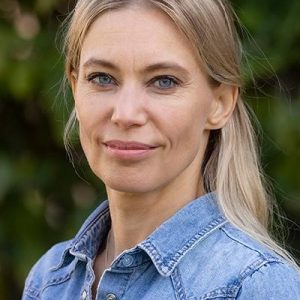
Emma Holmqvist I have for many years been a researcher (PhD in Human Geography, 2009) at the Institute for Housing and Urban Research (IBF) at Uppsala University, Sweden. IBF is an interdisciplinary institute, and this is highly reflected in my research and projects, which often include political science and sociology, and in which I mix quantitative and qualitative methods. I often find interest in evaluation different housing policies and housing politics.
I have been engaged in projects on planning for social sustainability, sharing, segregation (social mix) and on how different housing policies affects access to housing across different groups (homeless, migrants). Lately, I have focused on how restrictive changes in migration policy have affected individuals and cities, examining how increased temporality (e.g., temporary rather than permanent residency permits) shapes inclusion in society (e.g., housing and labour). My data focus is on Sweden, but I also do comparative work.
I am very interested in housing research, and as a member of the CC committee, I would like to strengthen the community of housing researchers and facilitate knowledge sharing. I have been part of the CC committee for the last few years and have a special interest in serving the younger generation of housing researchers. If elected, I would like to continue developing this part of ENHR. I also enjoy the conferences and find this annual onsite activity important for housing researchers and would love to spread the work of the network, to make it inclusive for more, and develop other new activities.
Apart from conducting research, I teach urban, social, and political geography. I have also worked at the country’s Administrative Board in Sweden (2014-2016) and with research grants at a government research council (2017-2018). I am also an engaged and elected member of the IBF board.

Ebru Ergoz Karahan I am an Associate Professor in the Faculty of Architecture and Design at Özyeğin University, Istanbul, where my research focuses on energy behaviour in residential and campus environments, occupant-building interaction, and the sustainability of housing. I hold PhD, M.Arch, and B.Sc. degrees in Architecture and have professional experience with national and international construction firms.
My research is supported by nationally funded projects, and I actively supervise PhD students working at the intersection of spatial performance, energy efficiency, and occupant behaviour.
My work has been published in a range of international and national journals and books.
I have been a member of ENHR since 2006 and currently serve as co-chair of the Working Group on Energy Efficiency and Environmental Sustainability of Housing. Since 2012, I have organized the working group’s annual workshops along with my co-coordinators and have consistently worked to bring architecture and engineering perspectives into dialogue with housing research. I was among the organizers of the ENHR 2010 Conference in Istanbul, and throughout my membership, I have consistently prioritised welcoming and mentoring early-career housing researchers into the network.
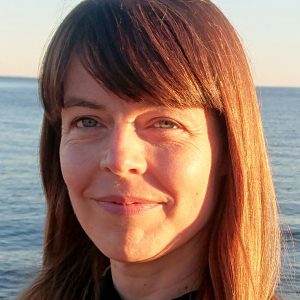
Johanna Lilius is a Senior Scientist at Aalto University and Title of Docent in Social Geography at the University of Helsinki. Her current research examines how planning and financialisation reshape cities, focusing on land and housing policy, social inclusion, and everyday urban life. She has led national and European projects and served as national lead for ESPON House4All (2023–2025), analysing Nordic housing policy instruments and the role of private landlords in Helsinki within wider European trends. Her policy-facing work includes evaluating segregation impacts of Helsinki metropolitan urban plans. She teaches housing policy and urban studies and serves as Head of Research (2023–2029) at Aalto’s Department of Architecture. She was chief editor of the Finnish Journal of Urban Studies (2020–2023) and sits on the editorial board of the Nordic Journal of Urban Studies (2025-).
Johanna has authored two books: Reclaiming Cities as Spaces for Middle Class Parenthood (Springer, 2019) and Boendets pris (The Price of Housing) (Athina/Förlaget, 2022).
Johanna has been engaged with ENHR since her first conference in 2015. In 2023, she spoke at the “Urban Change and Housing Market Developments in Europe” seminar of the “Home Ownership and Globalisation” working group. She is standing for election to help ENHR take an active role in current housing policy debates and to strengthen the often nationally scattered field of housing studies. She is committed to investing time and energy in broadening ENHR’s impact.
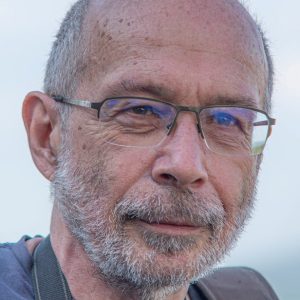
Iván Tosics is an “urban explorer”, eager to find interesting examples and good practices of cities to innovate urban development, for the sake of public interest and keeping the balance between social, environmental and economic interests.
Iván is one of the principals of Metropolitan Research Institute (MRI), Budapest. He is a sociologist (PhD) with long experience in urban sociology, strategic development, housing policy and EU regional policy issues. Between 2011 and 2022 he was one of the Programme Experts (Thematic Pole Managers) of the URBACT programme. He teaches at the University of Pécs, Department of Political Studies, Doctoral School. He is vice chair of the European Network of Housing Research (ENHR), executive committee member of the European Urban Research Association (EURA). He is the Policy Editor of the journal ‘Urban Research and Practice’.
He publishes extensively on topics like integrated urban development, urban renewal, metropolitan areas, EU urban policies, dilemmas of post-Covid urban development.

Constance Uyttebrouck I am a Research Associate at LISER (Luxembourg), where I lead the FNR-funded HypeRent project and contribute to the Housing Observatory, a longstanding collaboration with the Luxembourg Ministry of Housing. My research interests relate to (shared) housing provision for young people (see output), housing hyper-commodification (see output), and urban governance.
Since 2017, I have attended the annual conferences, working-group activities and chaired sessions at two new researchers’ webinars. Since 2022, I have been one of the coordinators of the Housing and Young People working group, which has run sessions at four conferences, organised three events across Europe, and curated the special issue “Housing young people under late neoliberalism” (see our editorial).
Housing is more than ever on top of the policy agenda, as well as a primary target for the real estate, tech and financial industries. I would be delighted to support the ENHR in its role as a bridge between research and policy at the European level and in its contribution to creating fairer housing systems. As a welcoming and inclusive network, the ENHR is one of the reasons I remain in academia. I would be pleased to contribute to the future of what I consider my research family.
Voting procedure
8 ENHR members have been nominated for a seat in the Coordination Committee (CC) by a fellow ENHR member.
The CC administers our network and consists of a maximum of 17 members. In case the number of nominated candidates surpasses the number of places available in the Coordination Committee – as is the case for the upcoming 2026-2030 term when 6 seats are available – a second round takes place in which ENHR members may cast their vote.
* Members from outside Europe, members via associated institutional members, and members who have not paid their contributions for 2026 are excluded from voting rights.
* You can cast your vote on any of the candidates, but with a minimum of three and a maximum of six candidates.
* The elections end on 26 June 2026, 18:00 pm CET. The results of the elections will be declared in the General Assembly.
* You will receive your invitation by e-mail containing a voting link; there is no voting option via the ENHR website.